Political Reforms
The community model needs a political system willing to hand real money and responsibility to a very local level, and to be audited for it. The present one is not built for that. This page proposes what should change, from how a constituency is won to how a municipality is run.
This is a page about institutional design, not about parties. It will not endorse, attack or align with any political party or leader, and it will not become a platform for partisan argument. The test applied to every proposal here is simple: would it still be a good idea if the party you least prefer were in office?
The model is only as good as the politics around it
A Setu Unit holds money, employs people, and decides what gets built. That makes it worth capturing. Every safeguard on this site — sortition, audit, the maintenance floor, the recall petition — is a defence against a political culture that would otherwise absorb it within two election cycles.
So the honest position is this: the community model cannot fix politics, and politics as it currently works would probably break the community model. Both have to move.
What follows are six moves: how representatives are elected, how citizens sit above them, how the municipality is returned to the public, who may stand and with whose money, how religion is taken out of politics, and how harmony is defended without fear.
End first-past-the-post, not democracy
Under first-past-the-post a candidate can win a seat with a third of the votes, and a party can win a majority of seats with well under half the national vote — as parties of different colours have. The cheapest route to a third of the vote is a caste or religious bloc. The system rewards division, then calls the result a mandate.
The three-party constituency
Three neighbouring constituencies are joined into one, electing three members instead of one. Each of the three parties with the largest share of the vote wins one seat, provided it crosses a threshold of fifteen per cent; a party that wins more than half the votes takes two. If fewer than three parties cross the threshold, the remaining seat goes to the largest. The size of the House does not change. What changes is that most voters in every constituency are represented by someone they actually voted for.
India has done this before. The first two general elections, in 1952 and 1957, used constituencies with more than one member, until an Act of Parliament abolished them in 1961. Restoring them in a new form needs an Act and a fresh delimitation — which falls due anyway after the first census taken after 2026 — not a new constitution.
Governing together
The three members form the Constituency Council. They administer the constituency’s development funds together and decide by two votes out of three, so one member can disagree without blocking, and no single party owns a constituency between elections. Every decision and every dissent is published.
The design starts from its obvious failure. Three rivals sharing one budget could deadlock forever, so every proposal carries a deadline: if the Council has not decided within thirty days, the Civilian Council’s recommendation stands. Paralysis has a price, and the price falls on the parties, not on the drain.
The Civilian Council
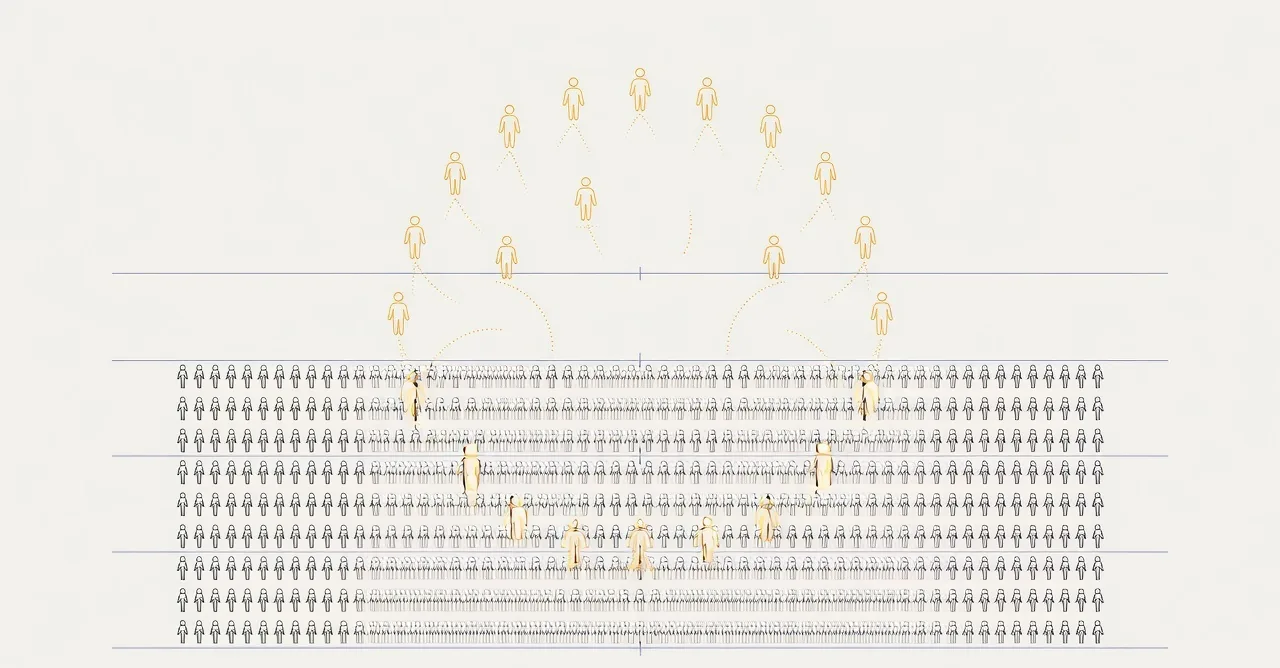
Above the parties sits a rotating council of citizens: nominated by citizens for their ability, then chosen by lot from among the nominees, so that nobody can campaign for a seat and no party can capture one.
Nomination
Any citizen may be nominated by a hundred residents drawn from at least three Setu Units in the constituency. Nominees publish their record of work, their assets and any conflict of interest. Anyone who has held party office in the past five years, or has been charged by a court with a serious offence, is not eligible.
Selection
Twenty-five members are drawn by lot from the eligible nominees, stratified by gender, age and habitation, so every part of the constituency — its poorest colonies included — is guaranteed seats. Ability decides who stands; chance decides who sits.
Rotation
Members serve two years, a third of the council is replaced every eight months, and nobody may serve twice in ten years. A council that changes constantly is one no family, contractor or party can settle into.
Powers
It approves the constituency’s development spending above a set threshold, holds public hearings at which the three members must answer, can require a written reply from any public office within thirty days, and can trigger a recall vote. It does not make law. Parliament does.
The Civilian Council is the Setu Unit’s Citizens’ Jury, scaled up to the constituency. The principle does not change: ordinary people, chosen fairly, rotated quickly, and given the power to see and to ask rather than the power to rule.
Municipal elections are governed by state law, so a single state can pilot three-member wards and a civilian council in one city corporation without waiting for Parliament. If it works there, the case for the Lok Sabha makes itself. If it fails, it fails small, and the design is corrected before it is tried anywhere larger.
Hand the municipality to the public
The 73rd and 74th Amendments promised local self-government more than thirty years ago. Most states transferred the functions on paper and kept the funds and the staff. The municipality remained an office people petition, not an institution they run.
The Twelfth Schedule already lists eighteen functions that belong to municipalities, among them urban planning, roads, water supply, sanitation, public health, slum improvement, parks and street lighting. Each state should transfer them in full, with the money and the people, on a published timetable — and the Setu Unit becomes the working arm through which residents run them for their own neighbourhood.
The constitutional channel exists. Ward committees are mandatory in every city of more than three lakh people, and some states have created area sabhas beneath them. A Setu Unit works at that level. The elected body keeps every statutory power and every approval; the unit does the work, and residents watch it being done.
This is what dividing the country into smaller economic units means here: not new borders, but some fifty thousand neighbourhoods that each hold a budget, a support centre, a work exchange and the obligation to use them — and in which the poorest resident is counted as a contributor, not a case file. See The Setu Unit.
Candidates, money and accountability
Criminal charges
Nearly half of the members elected to the Lok Sabha in 2024 declared criminal cases against themselves in their own affidavits. In 2014 the Law Commission recommended that anyone charged by a court with an offence punishable by five years or more be barred from contesting, with safeguards against cases filed for political motives. The model adopts that, together with special courts that decide cases against legislators within a year.
Party money
Even after electoral bonds were struck down in 2024, a large part of party income can still arrive without the public knowing who gave it. The model proposes real-time disclosure of every donation above a small threshold, spending limits on parties and not only on candidates, partial state funding tied to audited accounts as the Indrajit Gupta Committee recommended in 1998, and parties brought under the Right to Information, as the Central Information Commission ordered in 2013.
Between elections
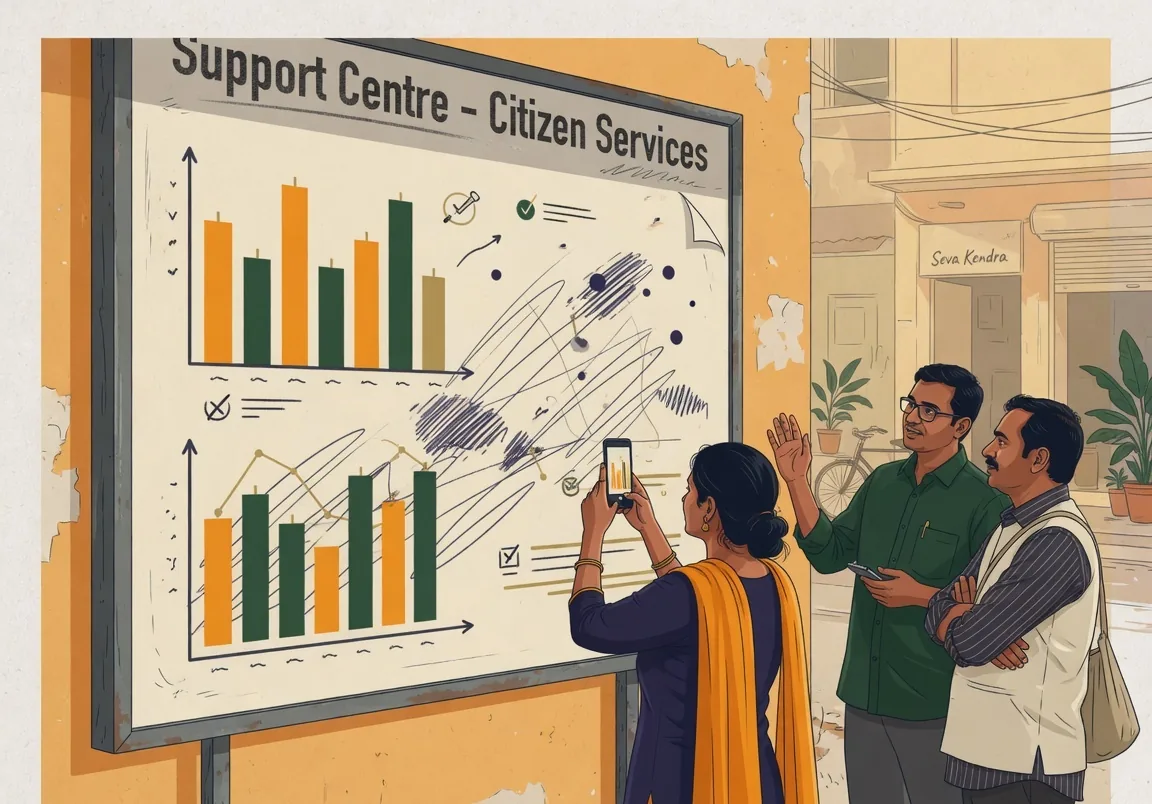
Five years is a long time to wait to express an opinion about a drain. Every member of the Constituency Council faces an annual public hearing before the Civilian Council, broadcast and archived. A recall vote is triggered by the Civilian Council together with a petition from a fifth of the voters, and decided by the whole constituency.
The officials a unit works with
An officer moved every few months cannot finish anything, and learns quickly to serve whoever moves them. In 2013 the Supreme Court directed fixed minimum tenures and civil services boards to decide postings; compliance has been patchy. The model makes compliance a condition of the central share of funding, and publishes the reason for every premature transfer.
A secular state with Sanatan values
Religion belongs to people, not to parties. The model separates religion from political power and governance completely, and draws its public ethics from the compassion at the core of Sanatan dharma, without asking anyone to share its beliefs.
Sanatan values here mean conduct, not creed: compassion, duty before entitlement, truthfulness, service, and a ruler answerable to the ruled. Nobody is asked to give up their faith, enter a temple or accept prasad. Everyone remains free to practise and live by their own faith, and the state favours none of them.
Taking religion out of politics
- Enforce the law that already exists. Appealing for votes on grounds of religion, caste or community is already a corrupt practice, and in 2017 the Supreme Court held that this covers the voter’s religion as well as the candidate’s. Today it is decided years later, in an election petition. The model gives the Election Commission the power to act during the campaign itself.
- Separate the offices. No minister or legislator holds office in the management of a religious institution, and no office-bearer of a religious institution holds party office.
- Equal distance. One law for the institutions of every faith, applied equally, so that no faith’s places of worship are run by the state while another’s are not, and no public money pays for the worship or pilgrimage of any faith.
- Dialogue, with limits. Every contested issue between communities is brought to structured dialogue, with boundaries agreed in advance and the courts as the final word — never the street.
Harmony defended by law, not by fear
A Ministry of Harmony would bring communities together before tension becomes crisis, and make sure that those who deliberately incite hatred — against any community, from any side — face the law quickly, every time.
Dialogue first
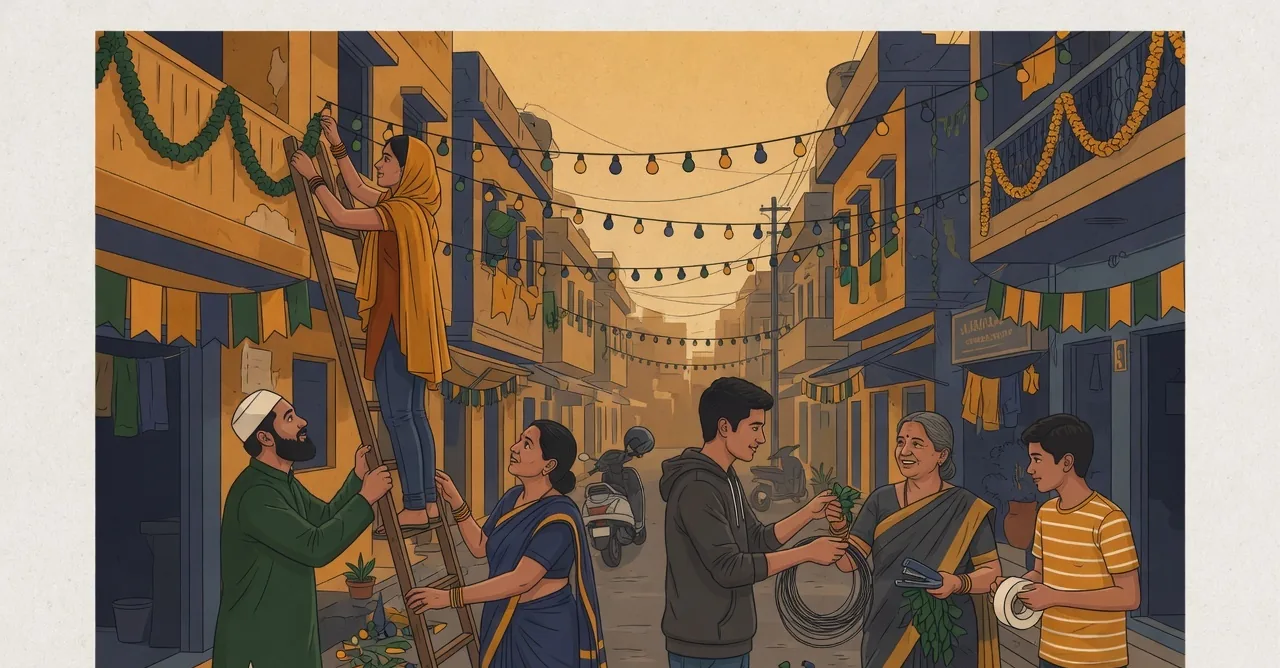
Standing peace committees in every Mandal, with members from every community, that meet in calm times and not only after an incident. A dispute over a procession route, a boundary or a loudspeaker is mediated early, before anyone is on the street.
Rumours answered in hours
When a rumour starts, a verified official correction goes out in every local language within hours, through the same channels the rumour used. A great deal of violence begins with a story that was not true.
The first knock is a conversation
A person drifting towards incitement is first visited by a respected local mediator, not a policeman — someone who can talk them back. Most angry people are not enemies, and this system exists to heal, including people who have lost their way.
Then the law, without fear or favour
For those who manipulate deliberately — who stir violence or hatred for gain — the law against promoting enmity already exists. The Ministry makes sure it is applied quickly and evenly, to offenders of every community and every party, with every case before a court and every outcome published.
The Ministry has no power over lawful speech, criticism of the government, satire, scholarship, belief or political opposition. It detains nobody, and it does nothing in secret. This is not softness. A ministry able to silence people quietly would be the first thing captured by whoever governs next, and turned against the very people who built it. Harmony that rests on fear lasts exactly as long as the fear does.
In the neighbourhood, the same work is done by the Setu Unit’s cohesion programme — see Cultural harmony.
Three years, and the courage to bind oneself
Reforms not begun in a government’s first three years are rarely begun at all; after that, the next election governs every decision. Three years is not the time to finish this. It is the time to put every reform into law, have it visibly working somewhere, and make it too useful to undo.
That takes decisive leadership: a head of government willing to take unpopular decisions and to refuse to let reform be held hostage by those whose hold on power it threatens. But the strongest reformers are the ones who also bind themselves — who build institutions their successors cannot capture, and safeguards that would protect citizens even from a government they themselves would oppose. Every proposal on this page is written to pass that test.
Still being worked out
The exact structure of the Civilian Council is the hardest design problem on this page, and the one most likely to change: its size, how nominations are verified, and what happens when it and the Constituency Council disagree. Objections to it are the most useful contribution anyone can make.