Global Trade Units
A weaver in a village and a buyer in Frankfurt are separated by eleven intermediaries, none of whom weave anything. That gap is where most of the value disappears.
This page is an outline. The full concept is being written and will replace what follows. What is here now is the shape of the argument, not its final form — published early on purpose, so it can be argued with while it is still easy to change.
From the unit outward
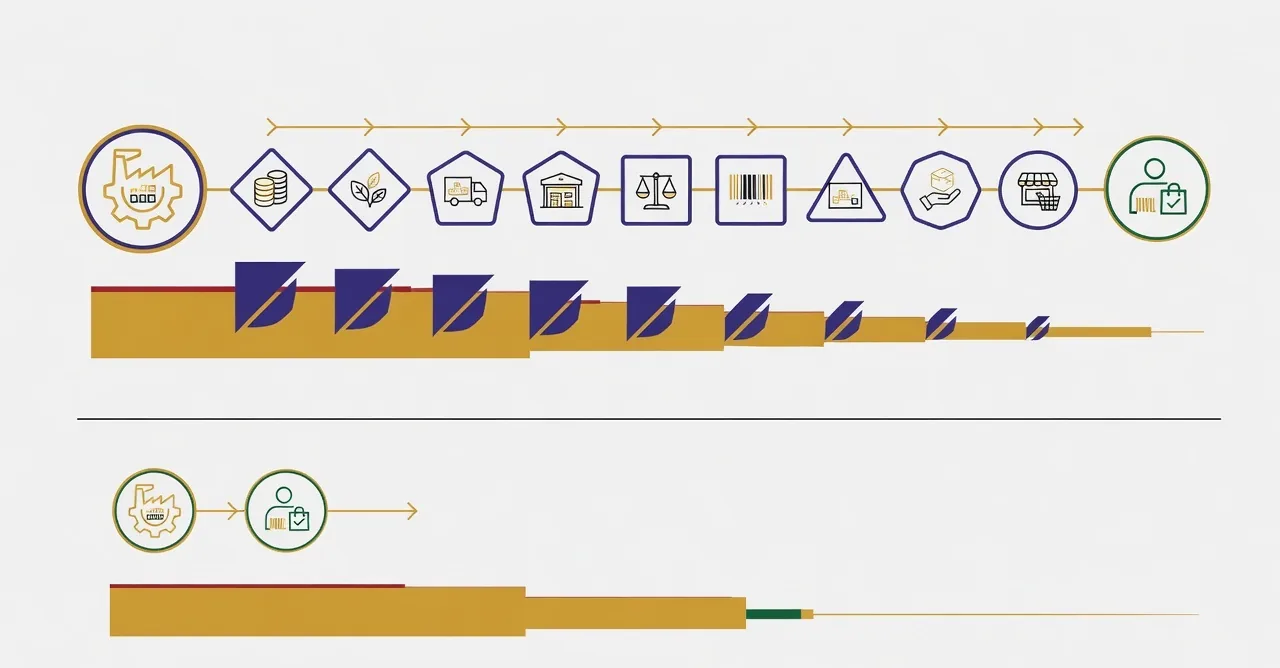
Every Setu Unit produces something — crops, cloth, components, crafts, processed food, services. Almost none of it reaches a market where the producer keeps a fair share of the price.
A Global Trade Unit would sit at Sangam or Mandal level, because export capability is far beyond a single unit, and provide what an individual producer cannot assemble alone.
What this page will work through
- Aggregation. Pooling small producers into volumes a serious buyer will talk to — the function producer companies and co-operatives already perform where they work, and why they usually fail where they do not.
- Quality, standards and certification. Testing, grading, food safety, organic and fair-trade certification, and GI registration for products that qualify. This is the barrier that stops most Indian small producers at the first step.
- Setu Bazaar. The local layer first — a catalogue of shops, producers, artisans and self-help groups, with a stated preference for buying within the Sangam wherever price and quality allow.
- Market access. Open network commerce domestically, and the export chain: documentation, customs, logistics, payments, and a buyer who does not vanish.
- Working capital. The reason most small exporters fail is not demand but the ninety days between shipping and being paid.
- Craft and GI protection. Protecting traditional products commercially rather than only ceremonially — and ensuring the protection benefits the artisan rather than a trader holding the certificate.
- Skills. Design, packaging, photography, listing, pricing, languages, and compliance — taught at the Learning Park.
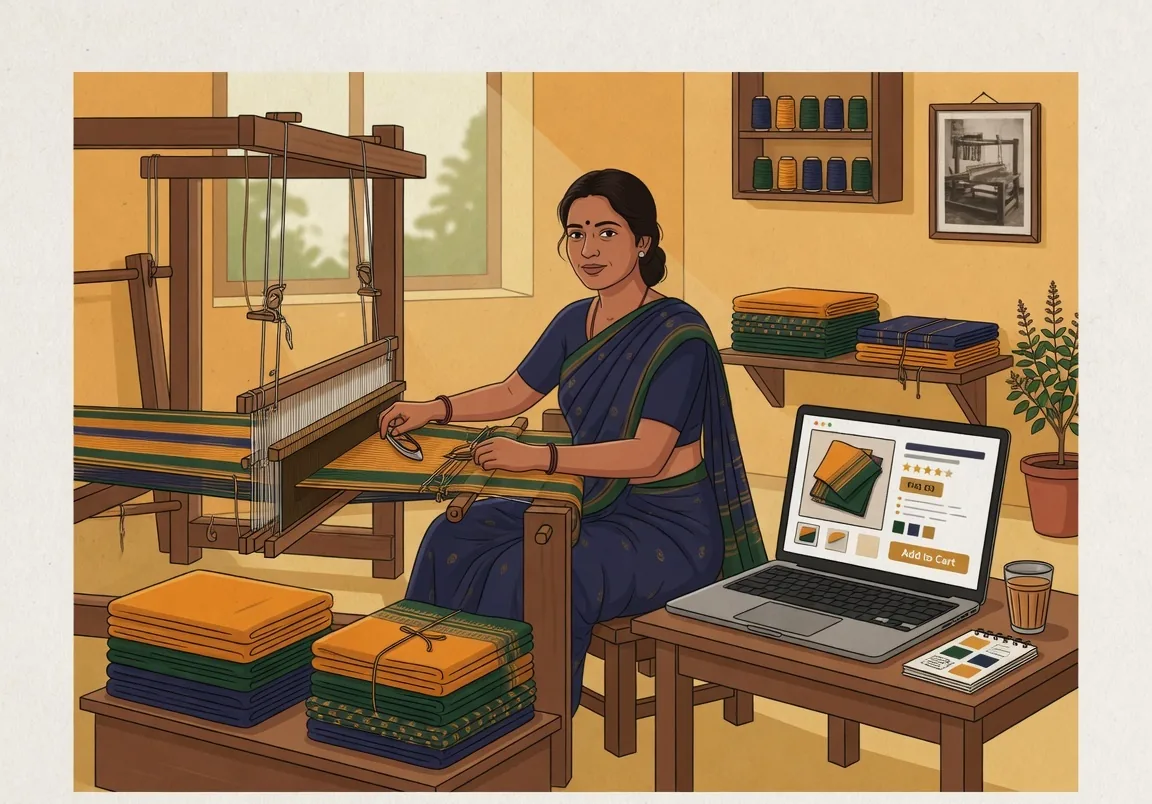
First, export-led craft revival has a long history of enriching everybody except the maker. Any design here has to answer, explicitly, what share the producer keeps and who enforces it.
Second, an outward-facing trade body is exactly the sort of institution local elites capture fastest, because it touches money and contracts. Whatever governance the rest of the model applies to the fund must apply here at least as strictly.