The Setu Unit
A unit is whatever population a single support centre can serve within a twenty-minute journey. That is the whole rule. Everything else — the number of units, the households, the budget — follows from it.
Five thousand units of one lakh people is not India
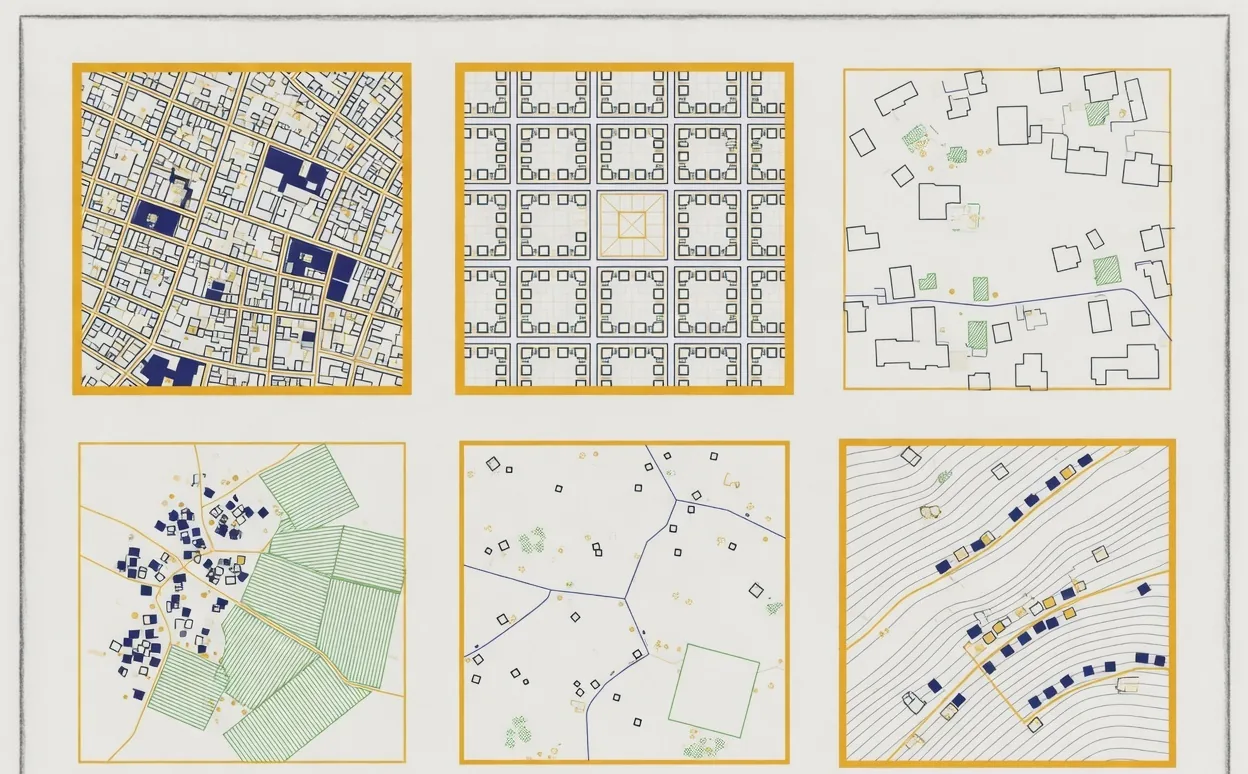
The original draft proposed roughly 5,000–6,000 micro-units of about 1,00,000 residents each. Those two figures cannot both be true of the whole country: they describe about 50–60 crore people, a little over a third of India.
This was flagged honestly in the source paper as an open question rather than hidden. The answer proposed here is not to pick a different national number, but to stop treating unit size as a national number at all. A unit in a Mumbai ward and a unit in a Spiti valley block have nothing in common except the function they perform.
So the size varies and the rule stays fixed:
Population-balanced, travel-time-bounded, and never cutting across an existing panchayat or ward boundary. A resident must be able to reach their support centre and return within a morning. Boundaries follow settlement, terrain, roads and existing local bodies — not political convenience.
| Context | Target population | Households | Maps onto |
|---|---|---|---|
| Metro ward | 40,000–60,000 | 9,000–14,000 | Municipal ward |
| City / small town | 25,000–40,000 | 5,500–9,000 | Ward cluster |
| Peri-urban | 20,000–30,000 | 4,500–7,000 | Census town |
| Dense rural | 10,000–20,000 | 2,200–4,500 | Gram panchayat cluster |
| Sparse rural | 5,000–10,000 | 1,100–2,200 | Two to five panchayats |
| Hill / tribal / desert | 3,000–8,000 | 700–1,800 | Existing tribal council area |
The unit-size calculator
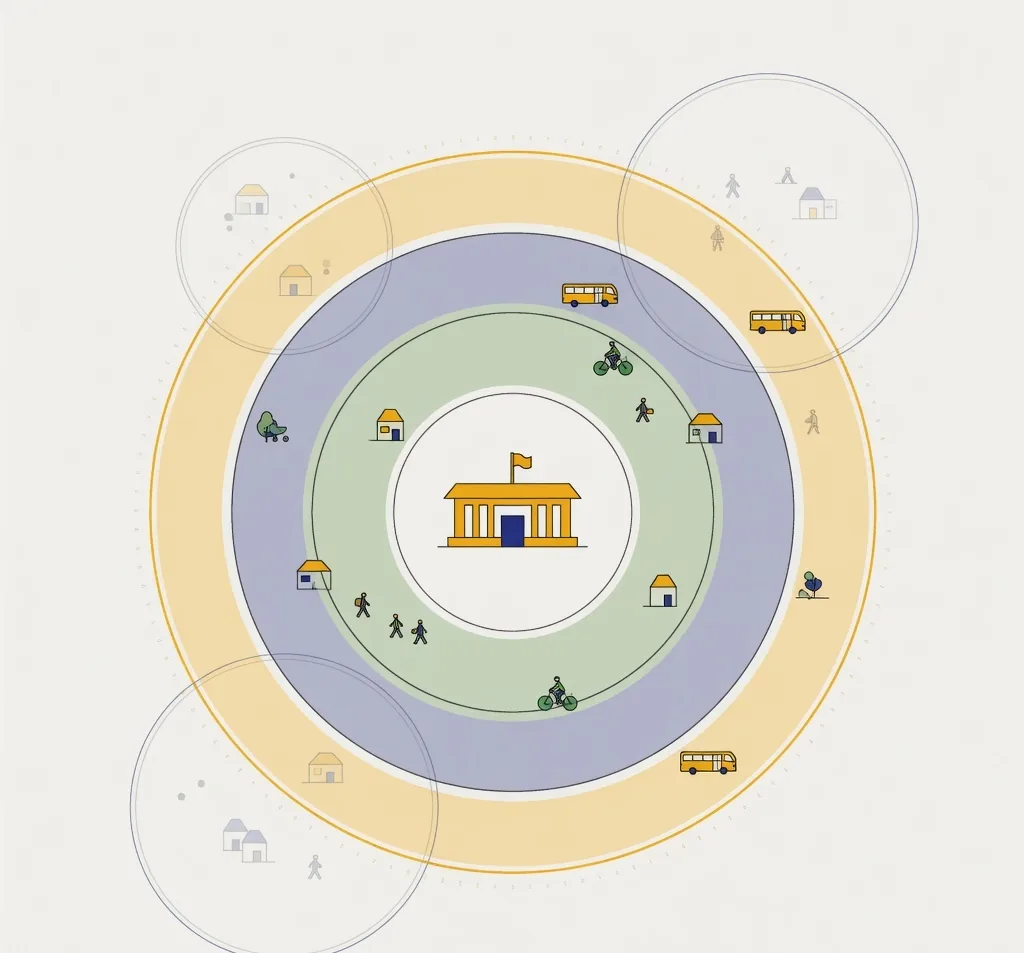
Every assumption below is a control you can move. This is deliberately not a fixed claim — it is an argument you can check.
—
Move the unit size down toward a rural figure and the number of units climbs past a hundred thousand. Move it up toward a lakh and the count falls — but the support centre stops being reachable, which defeats the point. The honest range for a national average sits somewhere between 25,000 and 40,000 people, giving roughly forty to fifty thousand units.
That is a large number. It is also roughly the number of wards and panchayat clusters India already has — which is exactly why the unit should sit on top of existing boundaries instead of inventing new ones.
Four tiers, named so people can argue about them
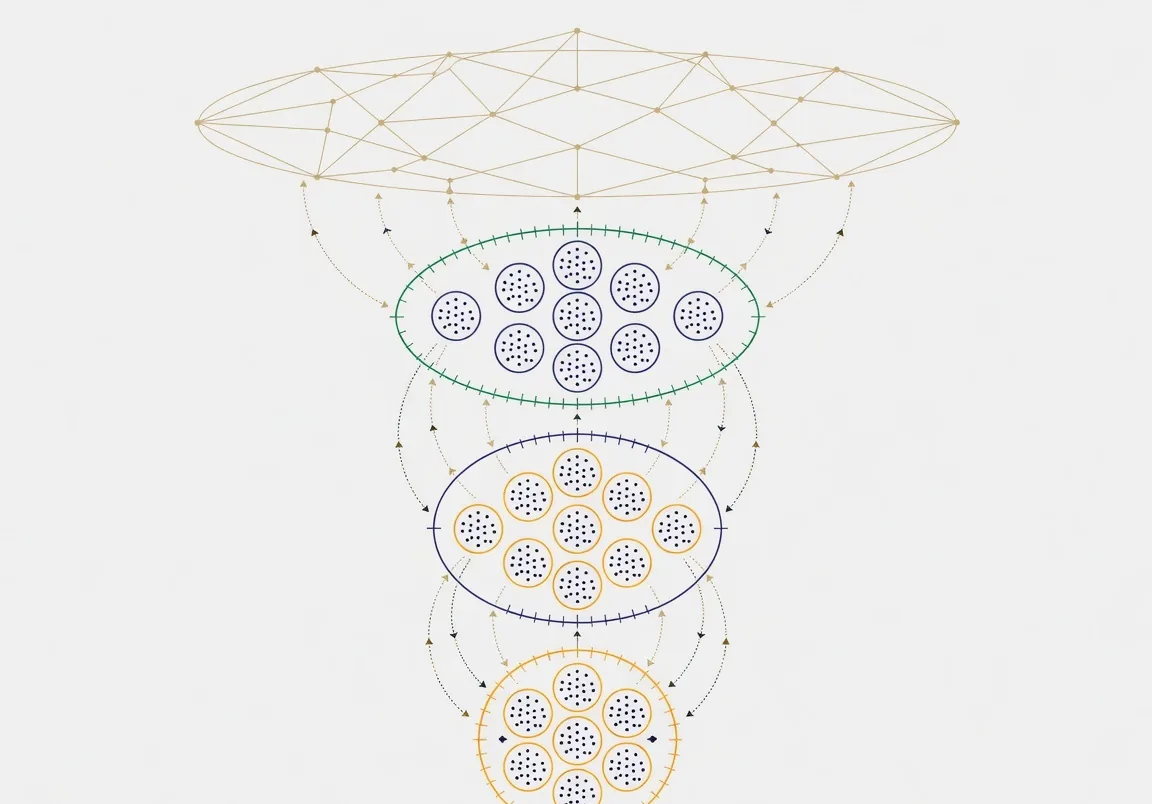
Solve it at the lowest level that is genuinely competent to solve it. Escalate the moment expertise, scale, rights or safety require it — and make the escalation visible to the person who asked.
Setu Unit
The cell. Support centre, task exchange, community employment, local projects, learning park, care network, cultural life.
Sangam
Ten to fifteen units. Shared specialists, equipment, hospital, training centre, procurement. Receives every escalation the unit could not resolve. Hosts the Privacy Ombudsman.
Mandal
The district network. Specialist administration, larger works, technical standards, appeals, and the interface with the district administration.
Bharat Setu
The nation as a network, not a bureaucracy. Standards, interoperability, learning resources, research links, skill mobility, fiscal equalisation.
Under government, without needing a new law
This model does not work without government. It is not an attempt to build a parallel state, and it should never be read as one. The question is how a unit can exist now, under proper supervision, without waiting years for legislation.
The answer: register each Setu Unit as a Community Development Society under existing societies or state co-operative law, using a model bye-law notified by the state. It can hold the fund, employ community workers, sign contracts and be audited — while holding no statutory power of its own.
What the unit does
- Holds and spends the community fund, in public view
- Runs the support centre and employs community workers
- Operates the task exchange, learning park and care network
- Proposes, supervises and maintains small local works
- Escalates everything beyond its competence, visibly
What only government does
- Every regulated approval — tenders, permissions, land, building
- All policing, enforcement and prosecution
- Wage determination, labour regulation and inspection
- Technical standards, engineering sign-off and safety
- Statutory audit, supervision, and suspension of a failing unit
A state-notified model bye-law. A district officer as ex-officio observer. State audit of the fund. Power to suspend a unit and appoint an administrator when it fails. The unit supplements the municipality and the panchayat — it never overrides them, and the 73rd and 74th Amendment bodies remain the constitutional local government.
Every unit's charter lapses after five years unless residents actively renew it by vote. If they do not, the unit dissolves and its assets transfer to the local body. A structure that must re-earn its existence behaves differently from one that assumes it.